Charging at Home vs at a Station: An Honest Comparison
Charge at home or at a station? See how each option works, what goes into the cost, what the installation requires and when each one works best.
Home charging: how it works
At home, there are two main options:
220V household outlet
The most basic option is a dedicated 220V outlet. Never use extension cords or adapters to charge an electric car. At 10 A, the outlet delivers 2.2 kW (220 V × 10 A = 2.2 kW). In 10 hours, that gives 22 kWh (2.2 kW × 10 h). It is slow, but it works for those who drive little and leave the car parked overnight.
The dedicated circuit with an RCD has an installation cost. See what goes into it in installing a charger at home.
Dedicated wallbox
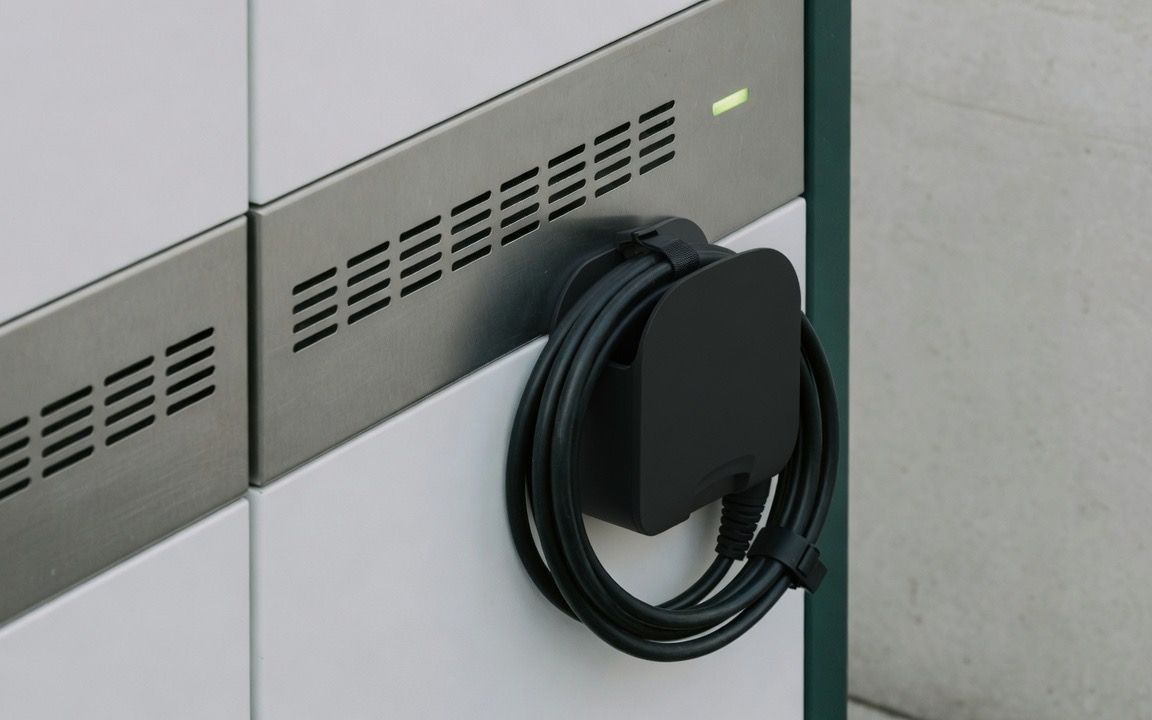
A wallbox is a charger installed on the garage wall. The power depends on the model and the installation, and the car receives at most its AC limit, which is on the manufacturer's spec sheet. The cost of the equipment and the installation is in installing a charger at home.
Public charging stations: options
Public charging stations fall into three types:
AC where you stop
They are in malls, hotels, parking lots and supermarkets. Charging is slower than DC and suits those who stay parked for a while. Some places offer free charging: see free charging at stations.
Fast DC
This is the option for fast charging. On Elektro Charge's 60 kW DC charger in Pinhais, charging from 20% to 80% takes about 40 minutes, according to the unit's data sheet.
Higher-power DC
There are higher-power DC chargers. The car receives at most the DC power it accepts, which is on the manufacturer's spec sheet.
How to compare the cost
To compare the annual charging cost, take an example: a driver in Curitiba who drives 15,000 km a year with an EV that consumes 15 kWh/100 km uses 2,250 kWh a year (15,000 × 15 ÷ 100):
- Energy at home: the kWh of the year times the kWh price on your electricity bill.
- Energy at the station: the kWh of the year times the kWh price charged at the charger.
- Mixed charging: each part in the proportion you use home and station.
- Gasoline, for comparison: the km of the year divided by your car's km per liter, times the price per liter. The km per liter and the price per liter are yours.
See the math step by step in how much it costs to charge an electric car. Also add the cost of the home installation: installing a charger at home.
Practicality: where each one wins
Home charging wins when...
- You have your own garage or a fixed space in a condo
- Your daily commute fits in the overnight charge
- You value the convenience of charging while you sleep
- You want to pay the kWh price on your electricity bill
The public station wins when...
- You live in an apartment without the setup for a wallbox
- You are on a trip and need fast charging along the way
- You need a lot of range in little time (fast DC)
- You want to take advantage of free charging at malls or hotels
- Your daily commute is long, beyond the overnight charge
Wallbox in a condo: is it possible?
Installing a charging point in the condo parking space depends on the building's rules and on an electrical project. The rules, the technical standard and the step by step are in charger in a condo: rules and step by step.
What if you can't install a wallbox?
If you can't install a wallbox, the public charging station is your main solution. Some options:
- Charging at the mall: the car charges while you shop. See how free charging works.
- Charging at work: some companies install chargers for employees.
- Weekly fast charging: a stop at a fast DC charger, in the time of a meal.
Elektro Charge in Pinhais, on Av. Maringá, has a 60 kW DC charger and is open 24 hours. You can set up a routine: plug in, eat at the restaurant next door and come back to a charged car.
Without a wallbox at home, you can still own an electric car and charge at the region's charging stations.
Conclusion: the ideal combination
You can use both options. Home charging, when possible, is practical day to day and uses the kWh price on your electricity bill. The public charging station is for trips, the unexpected and for those who can't charge at home.
If you are thinking about an electric car, do the math with your own numbers and see where the charging station closest to your routine is.
Elektro Charge charging stations
See on the map where the units are and plan your route.
See the points, hours and how to get there →