Fast vs Slow Charging: When to Use Each One
One of the biggest questions for those entering the world of electric cars is about the types of charging. Fast or slow? At home or at a station? Find out when each option makes the most sense, how much it costs and how it affects your vehicle's battery life.
The three levels of charging
Before comparing fast and slow, it is important to understand that there are three levels of charging for electric vehicles, each with its own speed and ideal application.
Level 1 — Common household outlet
The most basic charging uses a common 220V outlet with up to 10A. It delivers approximately 2.2 kW of power, which means charging a 50 kWh battery from zero can take more than 22 hours. It is the emergency option — functional, but extremely slow.
Level 2 — Wallbox or semi-fast charger (AC)
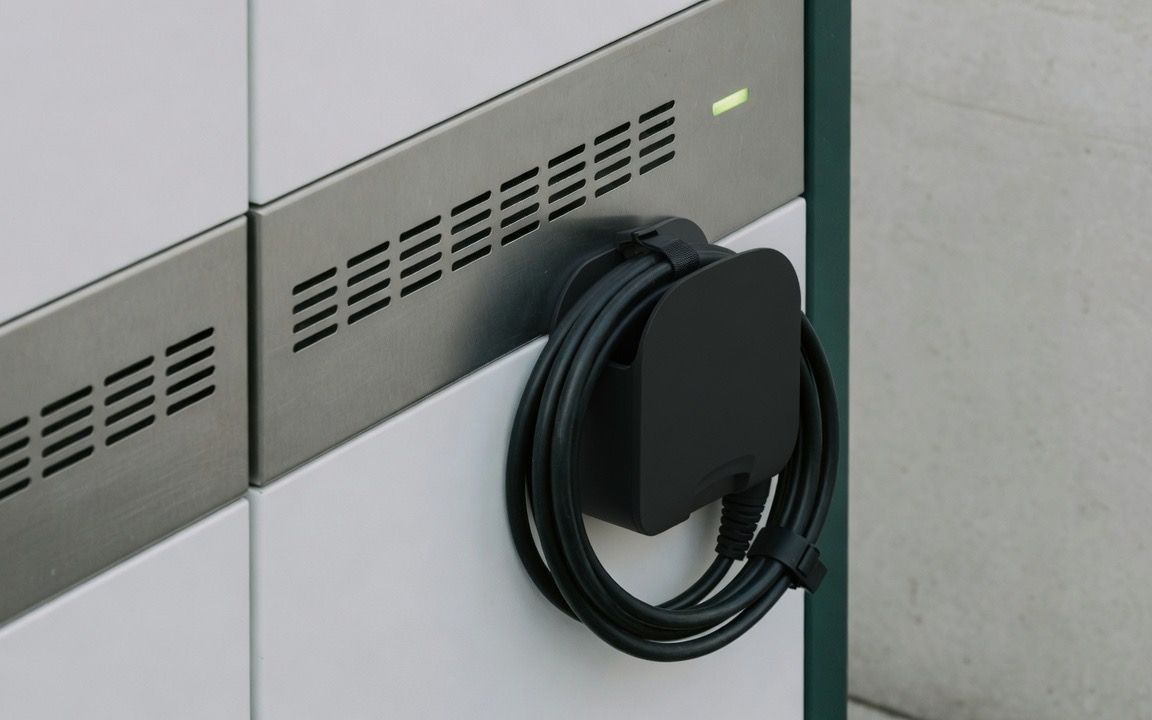
It uses alternating current (AC) with power levels ranging from 7.4 kW to 22 kW. A 7.4 kW wallbox charges a 50 kWh battery in about 7 hours — perfect for charging overnight at home. Charging stations in malls and parking lots usually operate at this level.
Level 3 — DC fast charging
Here energy is supplied in direct current (DC), straight to the battery, with power from 50 kW to 350 kW. A 60 kW charger like the one at Elektro Charge in Pinhais can add 200 km of range in about 30 minutes. It is the modern equivalent of "filling up the tank" at a quick stop.
Direct comparison: charging time
To make the comparison easier, let's use a 50 kWh battery (typical of the BYD Dolphin or GWM ORA 03) as a reference, charging from 20% to 80%:
| Type | Power | Time (20% → 80%) | Estimated cost |
|---|---|---|---|
| 220V outlet | 2.2 kW | ~13 hours | R$ 18–24 |
| Home wallbox | 7.4 kW | ~4 hours | R$ 18–24 |
| Semi-fast (public AC) | 22 kW | ~1h20 | R$ 30–45 |
| Fast DC (60 kW) | 60 kW | ~30 min | R$ 40–55 |
| Ultra-fast DC | 150+ kW | ~15 min | R$ 45–65 |
The golden rule: charge slowly day to day (at home, overnight) and use fast charging on trips and when you need range quickly.
Impact on the battery: myth or truth?
One of the most common concerns is: "does fast charging ruin the battery?" The short answer is: not significantly, as long as you follow a few best practices.
Recent 2025 studies show that LFP (Lithium-Iron-Phosphate) batteries, used in models like the BYD Dolphin and Yuan Plus, are especially resilient to fast charging. The additional degradation compared to slow charging is only 1% to 2% over 8 years of regular use.
Modern batteries have thermal management systems (BMS) that control the temperature and charging rate automatically. When the battery is too hot or too cold, the car itself reduces the charging power to protect it.
Best practices to preserve the battery
1. Avoid charging above 80% on the fast charger (the speed drops drastically after that point).
2. Don't let the battery reach 0% regularly.
3. If possible, charge slowly overnight for daily use.
4. Use fast charging without guilt when you need it — it was designed for that.
5. Precondition the battery before arriving at the station (most EVs do this automatically via GPS).
When to use slow charging?
Slow charging (Level 1 or 2) is ideal for routine situations:
- At home overnight: plug in when you arrive and wake up with a full battery
- At work: if there are chargers in the company parking lot
- At malls and restaurants: while you go about your normal activities
- Daily urban use: if you drive less than 100 km a day, a home wallbox is enough
The main advantage of slow charging is the cost. Using residential energy in Curitiba (average rate of R$ 0.75/kWh in April 2026), charging 30 kWh costs about R$ 22.50. On the off-peak white rate, it can be even cheaper.
When to use fast charging?
DC fast charging shines in specific situations:
- Long trips: strategic 30-minute stops to recover range
- Emergencies: when you need a charge quickly and can't wait
- No charger at home: for those who live in an apartment without a wallbox installed
- Commercial fleet: app drivers and couriers who need minimum downtime
In Curitiba, which already has more than 6,400 registered electric vehicles, the demand for fast charging grows every month. For those in Pinhais or the metropolitan region, Elektro Charge offers 60 kW of power with 24-hour operation — ideal for that necessary charge before hitting the road.
The difference the experience makes during charging
A question many people ignore when comparing fast and slow charging is what to do during the wait. With slow charging at home, you simply forget the car on the outlet. With fast charging, you have 20 to 40 minutes to fill.
This is exactly where the concept of a charging experience comes in. Instead of standing in an empty station staring at your phone, why not take the chance to have a meal? At Elektro Charge, located on Av. Maringá in Pinhais, that is precisely the idea: dining next to the charger. You plug in, you eat, and when you finish your plate, your car is ready.
Charging time doesn't have to be wasted time. With the right concept, it turns into quality time — a break you would take anyway.
Conclusion: it's not "versus", it's complementary
The answer to "fast or slow charging?" is: both. They don't compete with each other, they complement each other. Charge slowly in your daily routine to save money and preserve the battery as much as possible. Use fast charging on trips, in emergencies and when you need speed.
With charging infrastructure growing rapidly in Paraná — more than 1,281 points across the state — the freedom of choice only increases. And in Curitiba, with 125 fast chargers available, you are never far from an express charge.
Need fast charging in Pinhais?
60 kW of power, CCS2 connector, 24 hours a day. Recharge your EV while enjoying the local dining.
See on Google Maps →