The Future of Electric Cars in Brazil: What to Expect by 2030
The short answer
By 2030, projections point to between 700,000 and 1 million electric and plug-in hybrid vehicles sold per year in Brazil, with a market share between 30% and 40% — up from today's 8% to 10%. The expectation is that electric car prices will approach combustion cars by 2028-2029, driven by falling battery costs and local production, while charging infrastructure expands along the main highways and cities.
Brazil sold more electric cars in 2025 than in the previous 5 years combined. But we are only at the beginning. What do the next 4 years hold for electric mobility in the country?
Where we are in 2026
Before projecting the future, it is worth understanding the present. In April 2026, the Brazilian electric vehicle landscape is:
- Fleet: More than 250,000 electrified vehicles (BEV + PHEV) on the roads
- Market share: Electrified vehicles represent about 8-10% of new-car sales
- Infrastructure: More than 12,000 public charging points across Brazil
- Market leader: BYD dominates with more than 40% of BEV sales
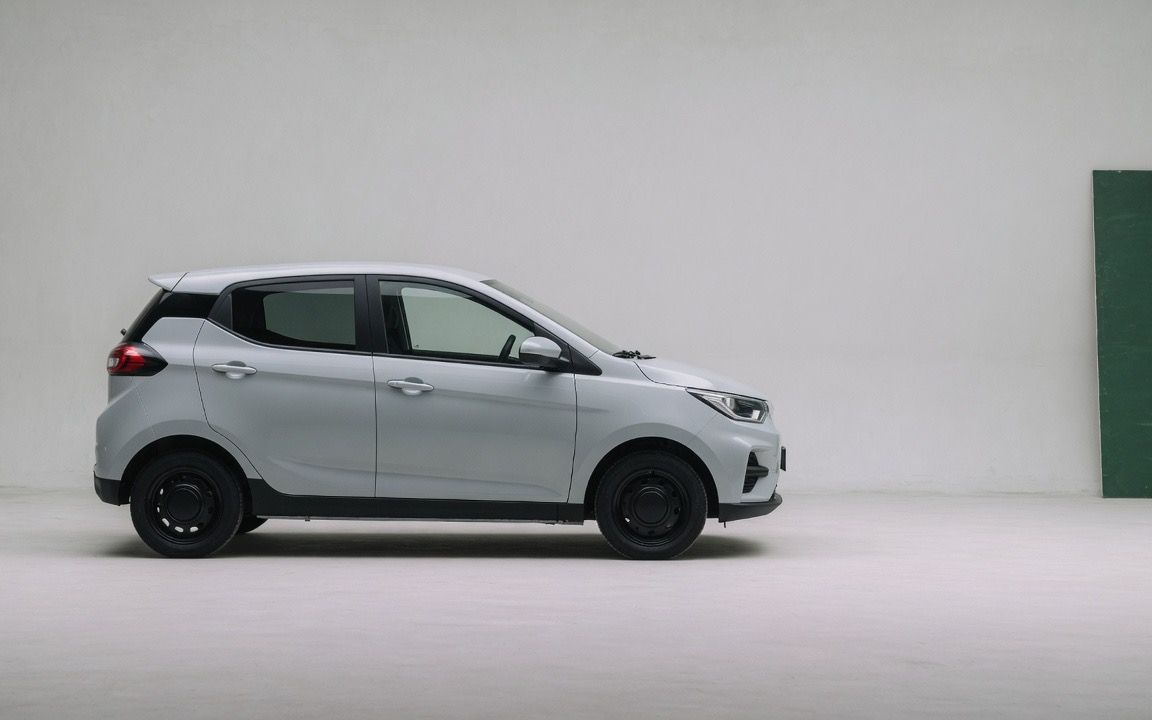
- Entry price: BYD Dolphin Mini starting at R$ 75,000 — the first EV below R$ 80,000
In Curitiba specifically, there are 6,400+ electric vehicles, 445 charging stations and 125 fast chargers (DC). The metropolitan region is one of the most advanced electrification hubs in the country.
Sales forecast through 2030
Projections vary by source, but they converge in one direction: exponential growth.
| Year | BEV + PHEV sales (estimate) | Market share (estimate) |
|---|---|---|
| 2026 | 180,000-220,000 | 8-10% |
| 2027 | 280,000-350,000 | 13-16% |
| 2028 | 400,000-500,000 | 18-22% |
| 2029 | 550,000-700,000 | 25-30% |
| 2030 | 700,000-1,000,000 | 30-40% |
If the trend holds, Brazil will have between 2 and 3 million electrified vehicles on the roads by 2030 — up from the current 250,000.
The tipping point
Historically, the adoption of new technologies accelerates when it reaches 15-20% market share. If EVs cross that line in Brazil in 2027-2028, growth could be even faster than the projections suggest. That is what happened in Norway, China and the Netherlands.
Prices: parity is coming
The biggest obstacle to mass adoption is price. But the trend is clear:
- Batteries: The cost of LFP batteries fell from US$ 140/kWh in 2023 to US$ 80/kWh in 2026. The industry's goal is US$ 60/kWh by 2028.
- Local production: BYD opened its factory in Camaçari (BA) in 2025, and GWM has plans for local production. Manufacturing in Brazil eliminates the 35% import tax on imported EVs.
- Economies of scale: With more sales volume, the costs of parts, logistics and technical support decrease progressively.
The expectation is that, by 2028-2029, there will be EVs cheaper than combustion equivalents in Brazil. The BYD Dolphin Mini already came close to that parity in 2026.
Charging infrastructure: the great construction site
The infrastructure needs to grow along with the fleet. The initiatives underway:
Highway corridors
The federal government's highway concession program included the installation of charging stations as an obligation in new contracts. By 2030, all the main conceded federal highways will have charging stations every 100 km.
The BR-116 (Curitiba-São Paulo), BR-376 (Curitiba-Joinville) and BR-277 (Curitiba-Coast) already have functional coverage in 2026. The BR-101 along Santa Catarina and the BR-381 in Minas Gerais are being equipped.
Urban charging
In the cities, the expansion comes from multiple fronts:
- Fuel stations: Shell, Vibra and Raízen are installing fast chargers at existing stations
- Supermarkets: Chains like Condor and Muffato in Paraná already offer charging points
- Parking lots: Technical standards require new developments to include spaces with electrical infrastructure
- Dedicated charging stations: Like Elektro Charge, focused on experience and charging speed
"Charging infrastructure is like the internet in the early 2000s: it grows fast, but never seems to be enough. Until, suddenly, it is everywhere."
Regulation and incentives
The Brazilian regulatory environment is evolving:
- IPVA: Paraná, São Paulo, Rio de Janeiro and other states offer IPVA exemption or reduction for BEVs. The trend is to maintain these incentives at least until 2030.
- Import tax: The rate for imported EVs rose to 35% in 2026, but this encourages local production — which in the medium term reduces prices.
- ANEEL: The regulation on selling energy at charging stations is being formalized, bringing legal security for investors.
- Rota 2030: The government program encourages investment in electrification with tax benefits for automakers.
New technologies on the horizon
Solid-state batteries
The next revolution. Solid-state batteries promise double the energy density of current ones, faster charging and no fire risk. Toyota, Samsung SDI and CATL have plans for scale production between 2027 and 2029. If the timelines hold, we will see EVs with 800-1,000 km of real range before 2030.
Ultra-fast charging
350 kW chargers already exist in Europe and China. In Brazil, the average power of fast chargers in 2026 is 60-150 kW. By 2030, 250-350 kW chargers should become common in highway corridors, allowing 10% to 80% charges in less than 15 minutes.
Vehicle-to-Grid (V2G)
Technology that allows the electric car to return energy to the grid. Instead of only consuming, your EV becomes a home battery — charging at night (low rate) and selling energy during peak hours. Pilot projects are already running in Europe and should reach Brazil by 2028-2029.
The role of Paraná
Paraná is well positioned in the transition:
- Clean energy matrix: Copel generates more than 85% of the state's energy from renewable sources (hydro, wind, solar). Charging an EV in Paraná is genuinely sustainable.
- Automotive hub: With Renault, Volkswagen and Volvo factories in Curitiba and region, the state has automotive industrial experience to attract EV makers.
- IPVA exemption: Paraná's tax incentive for BEVs is one of the most aggressive in the country.
- Growing infrastructure: 445 charging stations in Curitiba, with 125 fast ones, already make the city a reference in the South.
Curitiba in 2030: the projection
If the current trend continues, Curitiba could have 30,000 to 50,000 electric vehicles on the roads in 2030, served by more than 2,000 charging points. The city has everything it needs to be one of the main electric mobility hubs in Latin America.
What this means for you
If you are considering buying an EV, the next 4 years bring good news:
- Prices will fall: Local production and cheaper batteries mean more affordable EVs.
- More options: New models in every price range are arriving on the Brazilian market.
- Infrastructure will improve: More charging points, faster, in more places.
- Protected resale value: Demand for used EVs tends to grow as more people migrate.
But waiting also has a cost: every month you drive on gasoline is money you could be saving with electric. And the best incentives (IPVA exemption, for example) may not last forever.
"The future of electric cars in Brazil is not a question of 'if', but of 'how fast'. And 2030 is closer than it seems."
Conclusion
By 2030, Brazil will have millions of electric vehicles on the roads, prices at parity with combustion, robust charging infrastructure and technologies that today seem like science fiction. The transition has already begun — and those who adopt early reap the benefits first.
In Curitiba and Pinhais, Elektro Charge is part of that construction: 60 kW DC, CCS2, 24 hours, Av. Maringá. The infrastructure of the future, available today.
The future already charges here
60 kW DC, CCS2, 24h. Fast charging on Av. Maringá, Pinhais.
See on Google Maps →