First Electric Car: Which One to Buy? A Beginner's Guide
You have decided that your next car will be electric. But faced with so many options, brands and acronyms, the question arises: which model to choose? This guide was made for those taking their first step into electric mobility in Brazil.
Before choosing the model: the 5 essential questions
Before looking at spec sheets, answer honestly:
- How many km do you drive per day? Most Brazilians drive 30-60 km/day. Any current EV covers that with room to spare.
- Do you have somewhere to charge at home? A dedicated 220V outlet does the job. You do not need a sophisticated wallbox to start.
- What is your budget? In 2026, there are EVs from R$ 75,000 to R$ 500,000+. The sweet spot for a first car is between R$ 75,000 and R$ 150,000.
- Will you use it in the city or take long trips? For urban use, 250 km of range is enough. For frequent trips, consider 400 km+.
- Is it the only car or a second car? If it is the family's only car, prioritize range and space. If it is the second, it can be more compact.
The best electric cars for beginners in 2026
The Brazilian market has expanded a lot in the last two years. We selected the most relevant models for those buying their first EV:
Entry range: up to R$ 100,000
| Model | Price (Apr/2026) | Real range | Highlight |
|---|---|---|---|
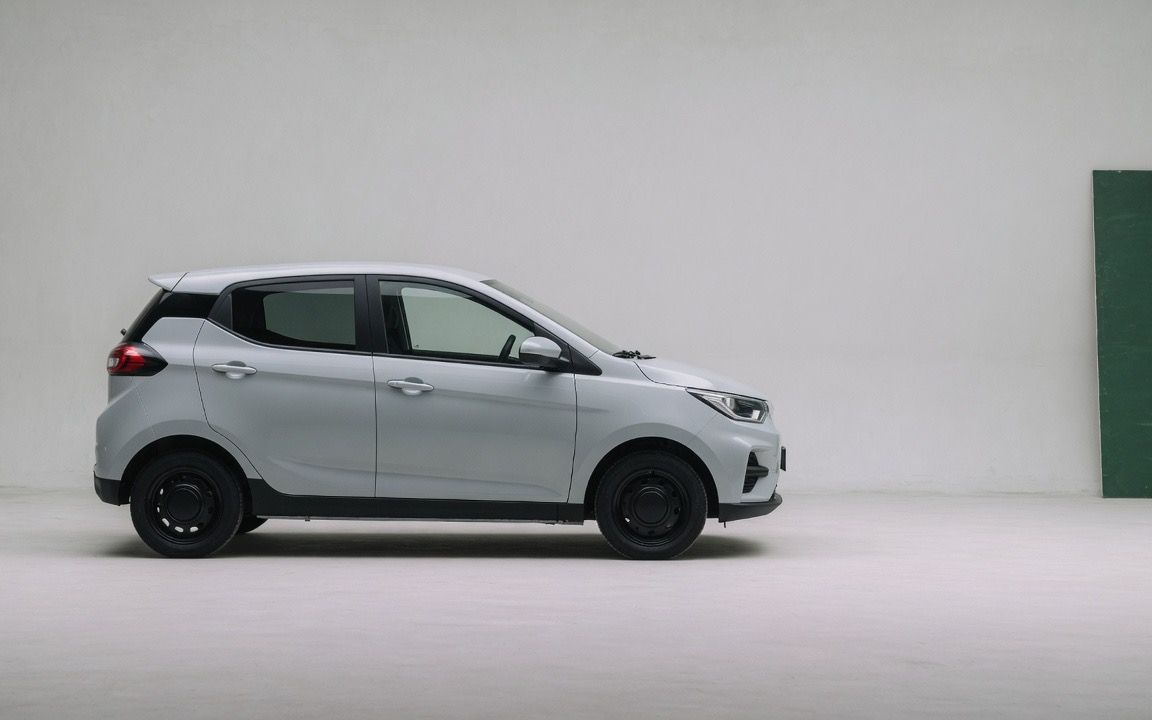
| BYD Dolphin Mini | ~R$ 75,000 | 220-250 km | Most affordable in Brazil |
| GWM Ora 03 | ~R$ 95,000 | 280-310 km | Striking design, good space |
The BYD Dolphin Mini is unbeatable on price. It is compact, efficient and perfect for the city. The GWM Ora 03 offers more space and range for a little more.
Mid range: R$ 100,000 to R$ 160,000
| Model | Price (Apr/2026) | Real range | Highlight |
|---|---|---|---|
| BYD Dolphin | ~R$ 115,000 | 300-340 km | Best overall value |
| BYD Yuan Plus | ~R$ 155,000 | 360-400 km | Compact SUV, family |
| Volvo EX30 | ~R$ 160,000 | 300-340 km | Premium, exemplary safety |
The BYD Dolphin is the reference. The Yuan Plus is for those who need an SUV. The Volvo EX30 is for those who want compact premium with the best safety rating in the category.
Our recommendation for beginners
If we had to choose a single model to recommend to a first-time EV buyer, it would be the BYD Dolphin. Competitive price, enough range for day-to-day use and short trips, a durable LFP battery, fast DC charging and the largest service network among EVs in Brazil.
Battery type: LFP vs NMC
You will come across two frequent acronyms:
- LFP (Lithium Iron Phosphate): used in the BYD Dolphin, Dolphin Mini, Yuan Plus. More durable, safer (it does not catch fire), tolerates full charges better. Downside: a little heavier for the same capacity.
- NMC (Nickel Manganese Cobalt): used in the Volvo EX30, GWM Ora 03 and most European cars. Higher energy density (more range per kg). Downside: it prefers to stay between 20-80%, with degradation more sensitive to extremes.
For a first EV, LFP batteries are more "error-proof" — you do not need to worry as much about charge limits.
Connector and charging: what you need to know
In Brazil, the standard for DC fast charging is CCS2. All the models listed above use CCS2. That means you can charge at any fast charging station in the country, including Elektro Charge.
There are three ways to charge your EV:
- Home outlet (slow AC): 220V/20A, gains ~15-20 km of range per hour. Charges all night and sorts out the next day. Lowest cost.
- Home wallbox (semi-fast AC): 7-22 kW, gains 40-100 km per hour. Ideal for those who drive more or want flexibility. Costs R$ 2,000-5,000 installed.
- DC fast charging station: 50-350 kW. From 20% to 80% in 20-40 minutes. Ideal for trips and emergency charges. It is the type of charger Elektro Charge offers (60 kW).
"90% of charges happen at home. The public charger is for the exceptions — but knowing it is there changes everything."
Myths that still scare beginners
"What if the battery runs out midway?"
This is the modern equivalent of the fear of flying. In practice, your car shows the remaining range all the time, warns you when it is low and even calculates routes taking charging stops into account. In Curitiba and the region, with more than 445 charging points, being "stranded" is extremely rare.
"The battery needs to be replaced in 5 years"
Manufacturers guarantee the battery for 8 years or 200,000 km (whichever comes first). In practice, LFP batteries keep more than 85% of their capacity after 300,000 km. There is no combustion vehicle with an equivalent warranty on the powertrain.
"It does not pay off financially"
An EV that drives 1,500 km/month saves R$ 1,500 to R$ 2,500 in fuel and maintenance compared with an equivalent gasoline car. In 3-4 years, the savings pay off the price difference.
The ecosystem in Curitiba and Pinhais
If you live in Curitiba or the metropolitan area, you are in one of the best places in Brazil to own an EV:
- 6,400+ electric vehicles already on the road in the region
- 445 charging stations, including malls, supermarkets and dedicated stations
- 125 fast chargers (DC), including Elektro Charge in Pinhais
- IPVA exemption for electric vehicles in Paraná
- An active community of EV owners with WhatsApp groups and monthly meetups
Checklist for buying your first EV
- Set your budget (include insurance and electrical installation)
- Calculate your real daily mileage
- Check whether your condo allows installing an outlet in the garage
- Test-drive at least 2 different models
- Map the fast charging stations on your usual route
- Compare the total cost of ownership (TCO) over 5 years, not just the purchase price
- Check the availability of technical support in your region
"The best time to buy an electric car was two years ago. The second-best time is now."
Conclusion
Buying your first electric car seems complicated, but in practice it is simpler than switching smartphones. The technology is mature, prices have dropped drastically and the infrastructure in Curitiba already supports the transition. Choose the model that fits your budget and your routine, and find out why no one who has switched to electric goes back.
Your first EV deserves premium charging
60 kW DC, CCS2, 24h. Come and visit Elektro Charge in Pinhais.
View on Google Maps →