Installing an Electric Car Charger at Home
Direct answer: charging at home requires a dedicated electrical circuit, sized by a qualified professional — it's not plugging into a regular socket. The cost varies mainly with the distance to the panel, the power available in your service entrance and the equipment chosen.
Three ways to charge at home
Regular socket: the makeshift that doesn't scale
Every electric car comes with a cable that plugs into a residential socket. It works, but delivers very little power: a full charge can take more than a day. Worse, a regular socket wasn't designed to supply high current for many hours in a row — that's how old wiring heats up and becomes a real fire risk. It's good for an emergency, not for routine.
Industrial socket on a dedicated circuit
A step up: an industrial-standard socket, connected on an exclusive circuit, with its own circuit breaker and protection. It costs less than a wallbox and works well for those who drive little and can leave the car charging all night.
Wallbox: the equipment made for this
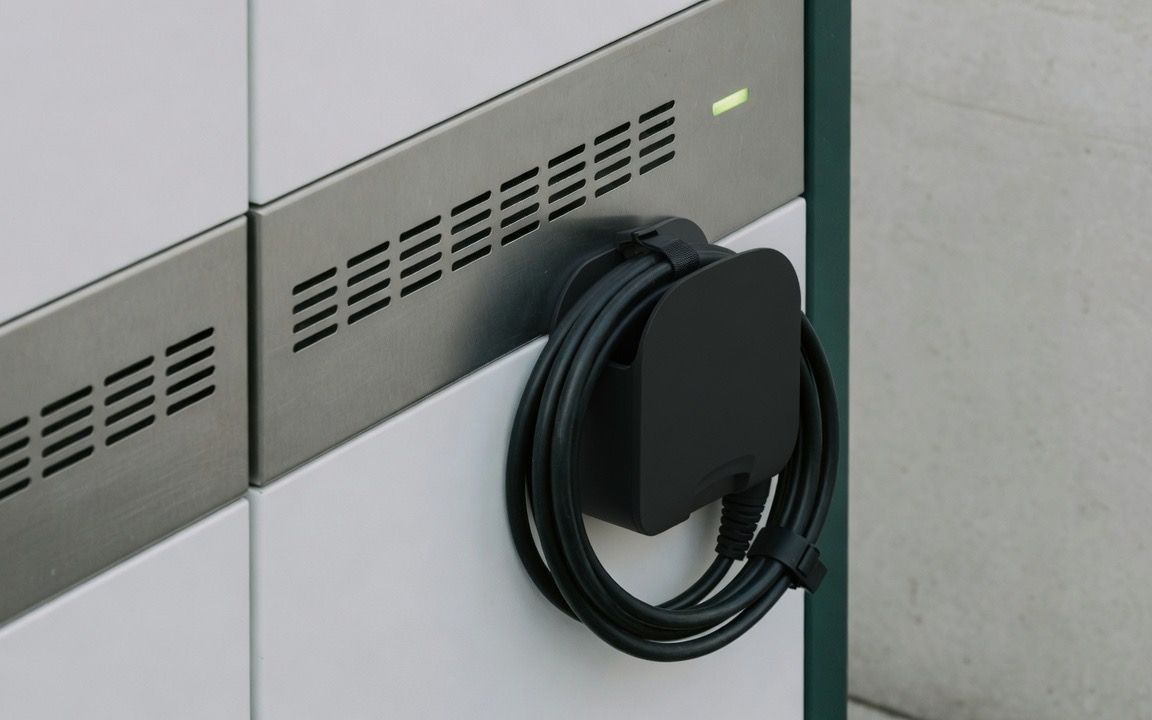
It's the wall charger proper. It delivers more power, has specific protections for vehicle charging, and connected models let you schedule times and track consumption. It's the option that makes sense for those who use the car every day.
What really defines the cost
The price of the equipment is the predictable part. What varies from home to home is the installation, and three factors explain almost all the difference:
- Distance to the power panel. Every meter of cable in the proper gauge counts. A garage right next to the panel is one scenario; a spot at the back of the lot is another.
- Power available in your service entrance. If the installation already operates near the limit, it may be necessary to upgrade the service entrance with the utility — and that is usually the most expensive item on the bill.
- Single-phase or three-phase. A three-phase grid allows higher power and faster charging. On a single-phase grid, there's a ceiling that no equipment gets around.
That's why a serious quote only comes after a technical visit. Any amount fixed over the phone, without someone seeing the panel and measuring the distance, is a guess.
Before asking for a quote, know the answers
1. What is the distance between the power panel and the parking spot?
2. Is your grid single-phase, two-phase or three-phase?
3. What is the contracted power and how much spare is there?
4. Would you charge in the small hours, with the rest of the house off?
5. Do you live in a condo? If so, do the bylaws allow it and can the riser handle it?
Who can install it
Installing a vehicle charger is electrical work, with a technical standard and professional responsibility. It must be done by a qualified professional, with a proper design, protection against leakage current and correct grounding. It's no place for improvisation: besides the risk, an irregular installation can compromise the warranty of the car and the equipment.
Elektro Charge operates public charging stations and doesn't do residential installation. This guide exists because the question comes up all the time from those who just bought their first electric car — and because those who charge at home still need fast charging on the road.
Living in an apartment changes everything
In a condo, besides the technical part, there's the collective part: authorization at the assembly, individualized metering of consumption and the capacity of the building's electrical infrastructure. Many older buildings don't have spare capacity for several spots charging at the same time, and the discussion becomes an infrastructure project, not the installation of a single point.
While that process doesn't move — and it usually takes months — fast public charging is what sustains the routine. It's the most common case among electric drivers in apartment buildings in Greater Curitiba.
Home and charging station complement each other
Charging at home is convenient and covers daily use. But home charging is slow by nature, and doesn't solve trips or the unexpected. The fast direct-current charger delivers in half an hour what the home charger takes all night to deliver.
The combination that works is simple: routine at home, trips and emergencies at the charging station. Those who have both rarely think about range.
While the installation isn't done yet
60 kW DC fast charging in Pinhais, 24 hours, at Av. Maringá, 2729.
View on Google Maps →Frequently asked questions
Can I charge my electric car in a regular socket?
Technically yes, with the cable that comes with the car, but only as an emergency. The power is very low and a residential socket wasn't designed to supply high current for many hours in a row, which can overheat the wiring. For routine use, the right thing is a dedicated circuit.
What defines the cost of installing a charger at home?
Three factors explain almost all the variation: the distance between the power panel and the parking spot, the spare power in your service entrance (if you need to upgrade the service entrance with the utility, that becomes the most expensive item) and whether the grid is single-phase or three-phase. A reliable quote requires a technical visit.
Who can install an electric car charger?
A professional qualified in electrical installations. The service involves a dedicated circuit, sizing of cables and circuit breaker, protection against leakage current and grounding. An irregular installation brings a safety risk and can compromise the warranty of the car and the equipment.
What is the difference between a wallbox and an industrial socket?
The industrial socket on a dedicated circuit is a simpler and cheaper solution, suitable for those who charge all night. The wallbox is the equipment designed for vehicle charging: it delivers more power, has specific protections and, in connected models, lets you schedule times and track consumption.
I live in an apartment, can I install one?
It also depends on the building: you need authorization, individualized metering of consumption and electrical capacity in the building. Older buildings often don't have spare capacity for several spots charging at the same time. While the collective project doesn't move forward, fast public charging tends to be the solution.