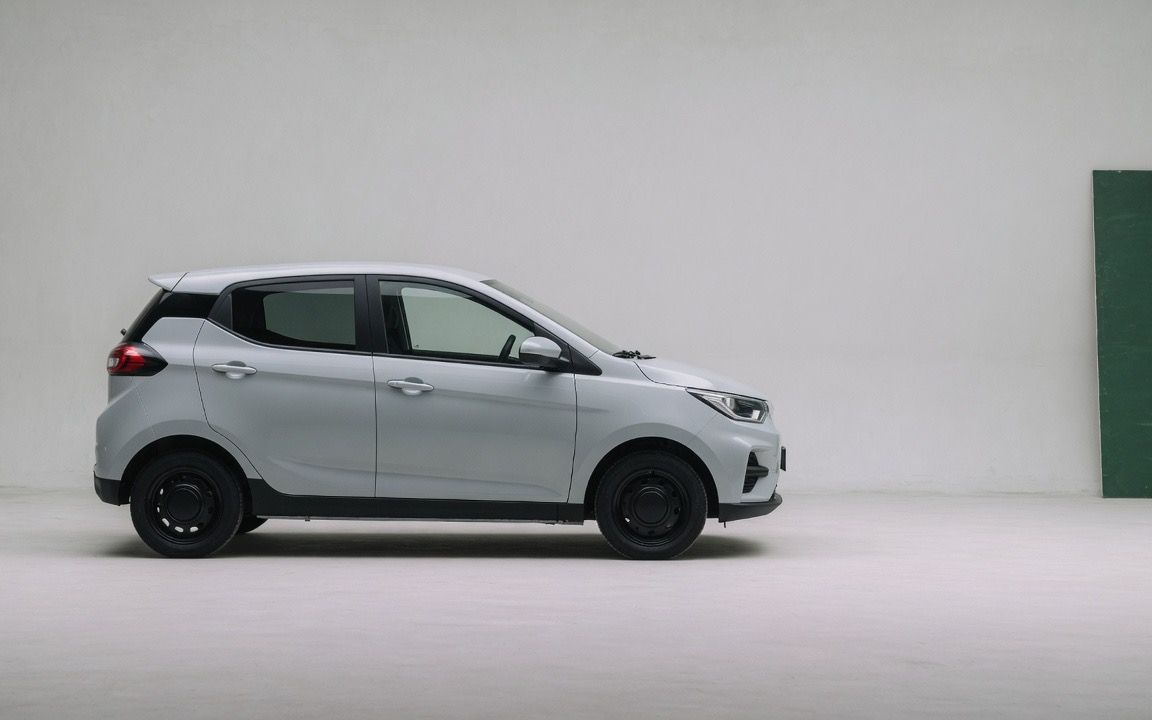
9 Advantages of Electric Cars That Go Beyond Savings
Everyone knows an electric car is cheaper to run. But the advantages go well beyond your wallet. From the driving experience to public health, here are 9 reasons that make EVs an increasingly smart choice.
1. Absolute silence (or almost)
Driving an electric car for the first time is a transformative experience. The electric motor is practically silent. No engine vibrations, no exhaust rumble. At low speed, the only sound is the tires on the asphalt.
For anyone who drives in Curitiba, with its heavy traffic, that means less fatigue on the daily commute. In an EV, the home-to-work trip becomes genuinely more pleasant.
2. Instant torque: acceleration that surprises
Electric motors deliver their torque from the very first rotation. There are no power bands, no turbo lag, no gear changes. You press the pedal and the car goes, right away.
That responsiveness makes the car more agile when overtaking and more fun to drive in the city.
3. Dramatically simpler maintenance
An electric motor has far fewer moving parts than a combustion engine. That difference translates into:
- No oil changes, ever
- No fuel filter
- No timing belt
- No spark plugs, coils or injectors
- No clutch or traditional gearbox
- Brake pads that wear less, thanks to regenerative braking
With fewer parts that wear out, maintenance usually costs less than for an equivalent combustion car.
4. Significantly smaller environmental impact
Electric cars emit no exhaust gases, because they have no exhaust. Their emissions over their lifetime depend on how the energy is generated.
Beyond CO2, EVs eliminate local emissions of NOx, particulate matter and carbon monoxide, pollutants that directly affect respiratory health in cities.
5. Charging at home: a "private gas station"
Imagine never stopping at a gas station again. With an electric car, you plug in when you get home and wake up with a "full tank" every day. It's like having a fuel station in your garage.
An outlet with a dedicated circuit, installed by an electrician, may be enough for overnight charging. Wallboxes charge faster, but they are not mandatory.
6. Superior onboard technology
Electric cars were born in the digital age. Most come with:
- A large central screen with integrated navigation (with charging-station locations)
- OTA (over-the-air) updates: the car improves over time
- Driving assistance (adaptive cruise control, lane centering)
- A phone app to monitor charging, pre-condition the car and check its location
- 360-degree cameras and advanced parking sensors
Even "entry-level" models like the BYD Dolphin and GWM Ora 03 come with a level of technology that only existed in luxury cars a few years ago.
7. The charging experience: time that adds value
In the traditional model, refueling is wasted time: you stop, pump gasoline and leave. With an electric car, charging away from home can be an experience.
The best charging stations sell more than kWh: they sell an experience. A meal, a coffee, a moment of rest while the car charges. Charging time becomes time well spent.
That's the philosophy of stations like Elektro Charge in Pinhais: a 60 kW DC charger at the same address as a restaurant. Charging becomes part of the routine instead of interrupting it.
8. Less dependence on fossil fuels
The price of gasoline is volatile: driven by oil, exchange rates and Petrobras pricing policy. Electricity, by contrast, has more predictable, regulated adjustments.
Beyond predictability, you become less dependent on a complex global supply chain. The energy that moves your car can come from a power plant near you or, in the future, from the solar panels on your roof.
9. A contribution to public health
Combustion vehicles are responsible for a large share of air pollution in cities.
Every electric car on the streets is one less car emitting fine particles (PM2.5), nitrogen oxides (NOx) and volatile organic compounds.
The snowball effect
The more electric cars on the streets, the more charging infrastructure becomes viable. More infrastructure attracts more buyers. It's a cycle that feeds itself.
What about IPVA? In 2026, electric cars pay IPVA in Paraná, at the general rate of 1.9% of the market value (Paraná State Finance Department, January 7, 2026). See the details in IPVA on electric cars in Paraná.
Conclusion: a change that goes beyond the car
Switching to an electric car means more than changing fuel. It means adopting a different way of thinking about mobility: quieter, cleaner, more technological and, yes, cheaper. The 9 advantages listed here are only the beginning.
The most important thing is to try it. Take a test drive. Talk to someone who already owns one. And if you need fast charging in the Curitiba region, the infrastructure is ready to welcome you.
Try fast charging
Elektro Charge in Pinhais: 60 kW DC charger, CCS2, 24 hours, at the same address as a restaurant on Av. Maringá.
See the points, hours and how to get there →